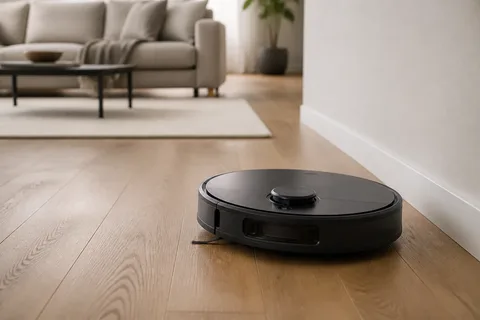
The Narwal Freo Flow combines 22,000 Pa of suction with a FlowWash roller mop and a station that automatically empties dust. It uses dToF LiDAR for navigation and two cameras to recognize objects around the home.
 pandealia.euThe best coupons from Chinese stores, prices and price history in one place.
The Narwal Freo Flow combines 22,000 Pa of suction with a FlowWash roller mop and a station that automatically empties dust. It uses dToF LiDAR for navigation and two cameras to recognize objects around the home.
Carpet vacuuming and edge cleaning
The robot’s 22,000 Pa suction helps remove dust and debris from different surfaces. On carpets, CarpetFocus technology creates a high-pressure zone directly above the surface, doubling its ability to capture dirt.
Zero-Tangle brushes help reduce hair and debris tangling. Dynamic side brushes help clean along walls and edges, where dirt can accumulate.
Navigation and obstacle avoidance
The dToF LiDAR navigation system helps the robot navigate its surroundings and plan a route. It can also move around in complete darkness.
TwinAI uses two HD cameras and artificial intelligence to recognize up to 200 types of objects, including toys, cables and slippers. TwinAI Dodge Vision helps the robot avoid obstacles during cleaning, reducing the risk of bumping into objects. Object recognition is not a substitute for checking the floor before a cleaning run.
Mopping along walls and on different surfaces
FlowWash uses a belt-style roller mop and hot water during mopping. The system is designed for effective floor cleaning and improved hygiene compared with conventional mops.
The EdgeReach mop extends by 48 mm and can reach within 5 mm of baseboards, helping it clean along walls and furniture. The mop can also lift by 12 mm, though that figure alone does not determine the height of threshold the robot can cross.
Dimensions and threshold clearance
At 9.5 cm tall, the robot can fit under furniture with enough clearance. It can cross thresholds up to 4 cm high and weighs 13.2 kg. Before buying, measure both the thresholds and the space beneath your furniture.
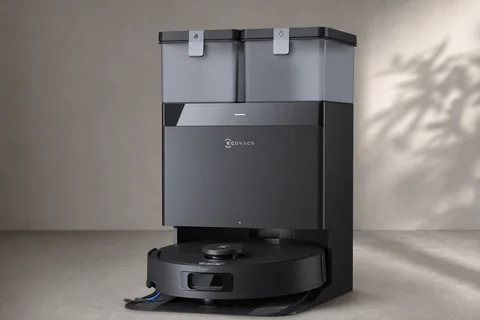
The station measures 402 × 431 × 461 mm. When choosing a location, allow room not only for the station itself but also for access to the tanks and dust bag. The robot is white.
Station and routine maintenance
The station automatically empties dust into a 2.5-liter bag that can last approximately 120 days. This is an estimated replacement interval, not a guarantee of completely hands-free operation: actual bag life depends on the amount of debris collected, and the water system also requires attention.
The station’s clean-water tank holds 5 liters, and its dirty-water tank holds 4.75 liters. The station can be connected to a water supply and drain, reducing the need for manual filling and emptying. Check the connection requirements and necessary equipment before installation.
The robot itself has a 130 ml water tank and a 300 ml dust bin. Automatic emptying and the station’s larger tanks reduce the number of routine cleaning tasks, but the device still needs regular checks and maintenance.