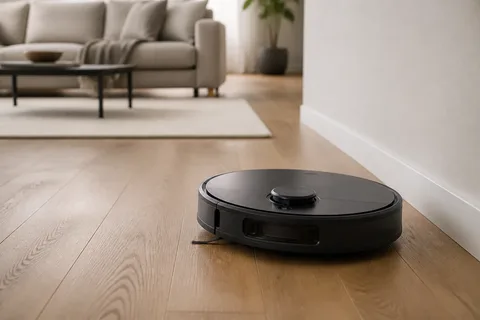
Introduced in 2026, the Narwal Flow 2 combines up to 31,000 Pa of suction with a FlowWash roller mop and an automatic service station. It uses LiDAR, cameras and object recognition to navigate around the home while cleaning.
 pandealia.euThe best coupons from Chinese stores, prices and price history in one place.
Introduced in 2026, the Narwal Flow 2 combines up to 31,000 Pa of suction with a FlowWash roller mop and an automatic service station. It uses LiDAR, cameras and object recognition to navigate around the home while cleaning.
Navigation and obstacle recognition
The robot uses a Hidden LiDAR sensor and a pair of AI cameras to navigate and map its surroundings. Its dual RGB camera system and structured light recognize hundreds of household objects, including cables, toys and other small items, helping the robot avoid obstacles as it cleans.
A figure of approximately 5 mm is also associated with detection, but it is unclear whether this refers to the distance from an object or its size. It therefore cannot be used to determine the minimum object size the robot can reliably recognize.
Mapping and image analysis take place on the robot without sending this data to the cloud. This limits the need to transfer images of the home to remote servers, but does not by itself explain how all other data in the app is handled.
Suction and anti-tangle brushes
Maximum suction of 31,000 Pa helps the vacuum pick up dust and larger debris from different surfaces. The Zero-Tangle system consists of a floating main roller brush and two dynamic side brushes. They are designed to limit tangling from human and pet hair, which can make maintenance easier.
The side brushes also help collect dirt along walls and in corners. How well the robot can reach particular areas depends on the placement of furniture and other obstacles.
App and features for homes with pets
The mobile app lets users schedule cleaning cycles, select special modes and create no-go zones to keep the robot out of designated areas.
The app also offers real-time tracking of pet movement. The robot identifies areas where pets frequently spend time and gives them extra attention during cleaning. This can be useful where hair and dirt tend to accumulate.
FlowWash mopping
FlowWash uses a roller mop that is continuously rinsed with clean water through 16 nozzles as the robot moves. Dirty water is extracted, while a squeegee continuously cleans the mop. The system helps limit the spread of dirt and the formation of streaks on the floor.
The mop applies 12 N of force, and the water is heated to approximately 60 °C during mopping. Heat and mechanical force help remove more stubborn stains.
Service station and maintenance
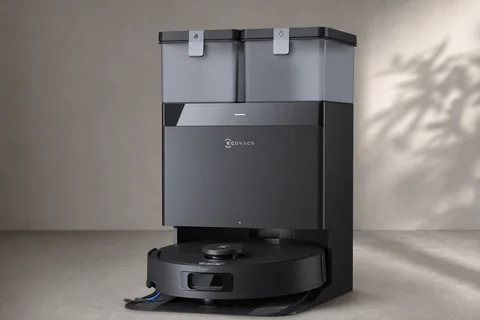
The service station collects dust in a 2.4-liter bag. Its stated lifespan is approximately 120 days, though the actual replacement interval depends on the amount of dirt collected.
The station has a 4.5-liter clean-water tank and a 4.05-liter dirty-water tank. It automatically refills clean water, dispenses detergent and cleans both the mop and the internal water lines. This reduces the frequency of manual upkeep, although users still need to refill the clean-water tank, empty the dirty-water tank and replace the dust bag.