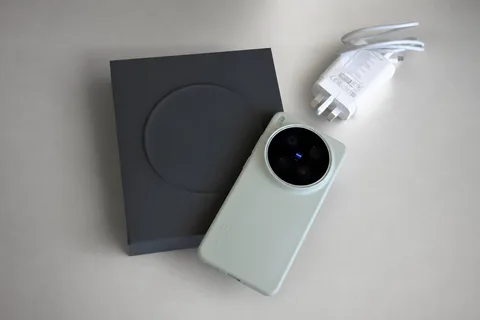
Introduced in 2026 alongside the X300 Ultra, the Vivo X300s has a 6.78-inch LTPO AMOLED display, a MediaTek Dimensity 9500 processor and a 200 MP main camera. It also features a 7,100 mAh battery, fast charging and IP68 and IP69 protection.
 pandealia.euThe best coupons from Chinese stores, prices and price history in one place.
Introduced in 2026 alongside the X300 Ultra, the Vivo X300s has a 6.78-inch LTPO AMOLED display, a MediaTek Dimensity 9500 processor and a 200 MP main camera. It also features a 7,100 mAh battery, fast charging and IP68 and IP69 protection.
Display with an adaptive refresh rate
The Vivo X300s display has a resolution of 1260 × 2800 pixels and a refresh rate of up to 144 Hz. The higher refresh rate enables smoother scrolling and visuals in supported games. LTPO technology adjusts the refresh rate to the content on screen, which can reduce power consumption.
The panel supports 10-bit color and HDR10+. With compatible content, it can display a wider range of color shades and take advantage of HDR imaging.
Performance, memory and storage
The phone uses a MediaTek Dimensity 9500 chip made on a 3 nm process, paired with an Arm G1-Ultra GPU. The hardware is also intended for demanding apps and games.
Quad-channel LPDDR5X RAM is available in 12 GB or 16 GB capacities. UFS 4.1 storage comes in 256 GB, 512 GB or 1 TB configurations. The larger capacities provide more space for photos, videos and apps.
Software and connectivity
The Vivo X300s runs Android 16 with OriginOS 6. Vivo promises up to five major system updates; this does not specify how long security updates will be provided.
Wireless connectivity includes Wi-Fi 7, Bluetooth 5.4 and NFC. The phone also supports the aptX HD and LHDC 5 audio codecs and has an infrared port for controlling compatible devices.
The USB-C port supports USB 3.2 Gen 1, OTG and DisplayPort, allowing compatible peripherals and an external display to be connected.
Battery, charging and durability
The 7,100 mAh battery uses fourth-generation silicon-carbon (Si/C) technology. The phone supports wired charging at up to 90 W and wireless charging at 40 W. Actual battery life depends on how the phone is used.
IP68 and IP69 ratings cover protection against dust and water, including high-pressure water under the conditions of the relevant tests. They do not mean unlimited waterproofing: immersion protection depends on specified conditions, and resistance can diminish over time.
Cameras
The 200 MP main camera has an f/1.68 aperture and a 1/1.4-inch Samsung HPB sensor. It also has optical image stabilization (OIS) and phase-detection autofocus (PDAF). Stabilization helps reduce the effects of camera shake, for example when shooting in lower light.
The 50 MP telephoto camera offers 3× optical zoom. It uses a 1/1.95-inch Sony Lytia 602 sensor, an f/2.57 aperture and OIS. It is designed to bring distant subjects closer without relying solely on a digital crop.
The 50 MP wide-angle camera has a 119° field of view for capturing a wider scene. The 50 MP front camera offers a 92° field of view, autofocus and 4K video recording at 60 frames per second.