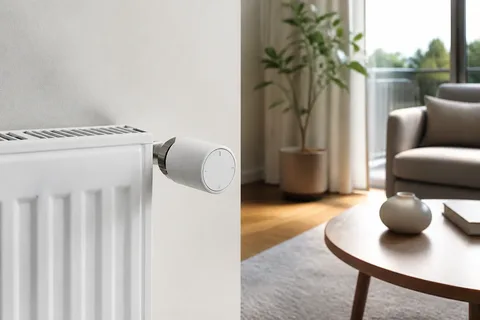
The EZAIoT smart thermostatic radiator head is available in Wi-Fi and Zigbee versions. Both let you control heating through an app or voice assistants and automatically close the radiator valve when an open window is detected.
 pandealia.euThe best coupons from Chinese stores, prices and price history in one place.
The EZAIoT smart thermostatic radiator head is available in Wi-Fi and Zigbee versions. Both let you control heating through an app or voice assistants and automatically close the radiator valve when an open window is detected. The main differences are how they connect and what they require from your home network.
Wi-Fi or Zigbee: which version should you choose?
The Wi-Fi version connects directly to your home network, so it does not need a Zigbee gateway. It is the simpler choice if you do not already have one.
The Zigbee version requires a gateway to communicate with your home system. If you already use a Tuya Zigbee gateway, it could be a natural addition to your setup. A Zigbee network can use a mesh arrangement, in which suitable routing devices help relay the signal. Range and stability depend on the placement and makeup of the network, however; the radiator head alone cannot guarantee either.
Zigbee communication may use less power and contribute to longer battery life than the Wi-Fi version. Actual battery life also depends on usage and conditions in your home.
Display, app and voice control
The head has a large, high-contrast VA display that can be rotated 180°. This lets you adjust the orientation of the display to suit the head's position on the radiator.
You can change heating settings through the app without adjusting the head at the radiator. Both versions support voice control through Alexa, Google Home and Yandex Alice, so you can incorporate them into a home that uses one of these assistants.
Power and noise
The head runs on three AA batteries, which can be replaced when depleted. Battery life depends on the connection version and how the head is used. The available product information does not specify a battery-life figure.
The motor operates at approximately 30 dB. It makes a sound while running, for example when adjusting the valve; how noticeable that sound is depends on the surroundings and the radiator's location.
Open-window detection and heating savings
When the head detects a sudden change in temperature, it can interpret this as an open window and automatically close the valve. The aim is to reduce unnecessary heating while the room is being aired. Because the feature assesses temperature changes, it does not directly sense whether a window is open.
Temperature control may also help reduce heating when it is not needed, such as when you are away. Any energy savings and related financial or environmental benefits depend on the settings, the heating system and the household.
Before choosing
The key question is whether you want to connect the head directly over Wi-Fi or already have a Zigbee gateway. Also consider the radiator's location and your network coverage. Before installation, check that the head is compatible with your radiator valve; the available product information does not specify supported valve types or adapters.