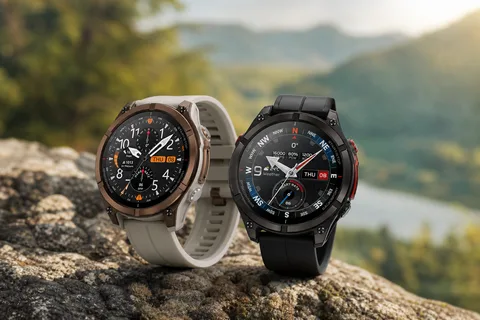
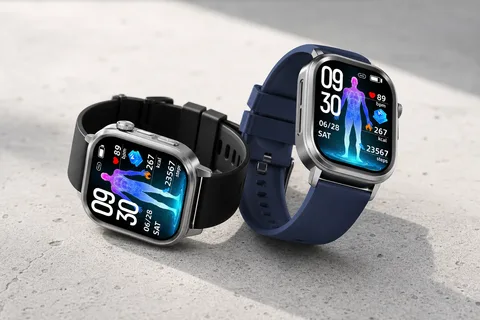
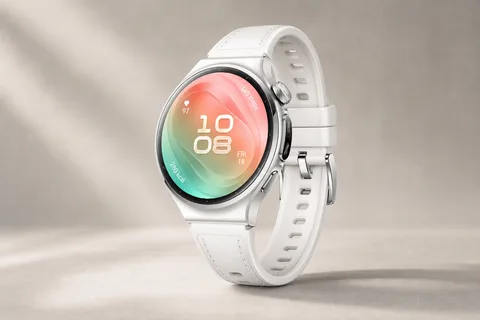
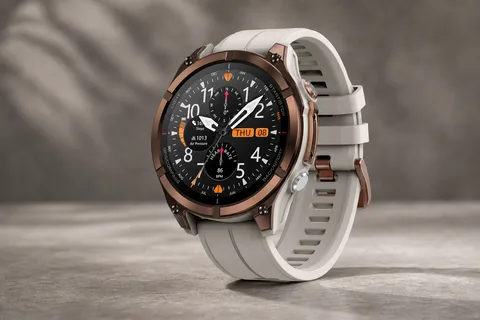
The OnePlus Watch 4 has a titanium alloy case, an LTPO OLED display protected by sapphire glass, and a dual-chip architecture combining the Snapdragon W5 and BES2800. It also includes motion and health sensors, NFC with Google Wallet support, and OxygenOS Watch 8 based on Wear OS 6.0.
 pandealia.euThe best coupons from Chinese stores, prices and price history in one place.
The OnePlus Watch 4 has a titanium alloy case, an LTPO OLED display protected by sapphire glass, and a dual-chip architecture combining the Snapdragon W5 and BES2800. It also includes motion and health sensors, NFC with Google Wallet support, and OxygenOS Watch 8 based on Wear OS 6.0.
Titanium case and dimensions
The titanium alloy case combines strength and corrosion resistance with a low weight. The watch weighs 43 grams without the strap and 68 grams with it. At 47.4 × 47.4 × 11.0 mm, however, it has a relatively large case that may look prominent on a narrower wrist.
LTPO OLED display with sapphire glass
The flexible LTPO OLED display has a resolution of 466 × 466 pixels and a pixel density of 310 PPI. The sharp resolution helps make text and graphics easier to read, while LTPO technology allows the display to operate more efficiently. The flexible panel curves around the edges of the case.
The display is protected by sapphire glass, which resists scratches during everyday use. That does not make it indestructible, however, and an impact can still damage the watch.
Water resistance and tougher conditions
The OnePlus Watch 4 is rated at 5 ATM, has IP68 and IP69 protection ratings, and meets the MIL-STD-810H standard. IP68 covers protection against dust and immersion in water, while IP69 also covers high-pressure water jets. The 5 ATM rating relates to pressure resistance; the watch is also intended for swimming.
These ratings describe tests under specific conditions, not unlimited protection in every situation. A 5 ATM rating does not mean the watch is intended for diving to a depth of 50 metres. Nor does MIL-STD-810H on its own guarantee protection against every impact or temperature extreme. Follow the manufacturer's instructions when using the watch in water or demanding environments.
Health, motion and environmental sensors
An accelerometer and gyroscope track movement, while an optical sensor measures heart rate. Together, they provide activity and heart-rate data during exercise and throughout the day.
The watch also has an SpO2 sensor for tracking blood oxygen levels and a wrist temperature sensor for monitoring changes. These measurements are for informational purposes and do not replace a medical examination or diagnosis.
A geomagnetic sensor helps with orientation, a light sensor allows the display brightness to adapt to ambient light, and a barometer measures atmospheric pressure. The barometer can be useful during outdoor activities, for example.
Two chips, Wear OS and NFC payments
The dual-chip architecture combines the Snapdragon W5 and BES2800 with the aim of balancing performance and power consumption. The presence of two chips alone does not determine battery life, which also depends on how the watch is used.
OxygenOS Watch 8 is based on Wear OS 6.0 and offers apps, customisation options and health-tracking features. The watch supports Wi-Fi, Bluetooth 5.2 and NFC, including Google Wallet for contactless payments.